
Click here to jump to project details ~
Click here to jump to project details ~
From the Archive
Exhibition of Lucy Bilson’s PhD design work at ImprovLab, MacKinnon 108, University of Guelph
Open June 9–10, 10am–4pm and June 11, 10am–2pm
Closed for viewing during public PhD defence, June 11 from 2–4pm
-
Drive to campus, get the GO train to Guelph Central Station then the 99S bus, or a GO bus right to campus (#17 goes to campus from KW).
Detailed directions to find ImprovLab are HERE.
-
ImprovLab is a research and performance space in the Arts Research Centre at the University of Guelph.
Find out more here.
-
Yes, the defence event is open to the public but you won’t be able to drop in to look around the exhibition while it is taking place. The defence starts at 2pm and will finish around 4.00pm.
-
Yes, the defence will be broadcast on Zoom. Link below!
Topic: Lucy Bilson PhD Defence
Time: Jun 11, 2026 02:00 PM Eastern Time (Toronto)
Join Zoom Meeting: https://zoom.us/j/92631873500?pwd=rGTc64aIvTq2IQXgb8OCTvhYa6T1DO.1
Meeting ID: 926 3187 3500
Passcode: 341995
-
Yes, the exhibition will be open to the public from 10am to 4pm on Tuesday 9 June and Wednesday 10 June. On Thursday 11 June, the exhibition will be open for viewing from 10am until the defence starts at 2pm.
-
A PhD Defence is like a final exam. I will do a presentation about my research, then answer questions from a committee about the work. It’s open to the public.

From the Archive reimagines public design work through anti-extractive reuse.


Each of the works in this exhibition repurposes content from projects installed in public spaces around Southwestern Ontario. Reusing and reharvesting creative output challenges obsession with newness and originality, opening up a new perspective from which to approach design.
Improvisation teaches us that we already have what we need to create.
About the Exhibition
Select a work below to read more about its original form and how it has been reimagined for From the Archive.
Portals

On This Land

The Forest of Curiosities

Feedback Loop

Ceremonial Plants

Artist in Residence
Beak Fad Pool
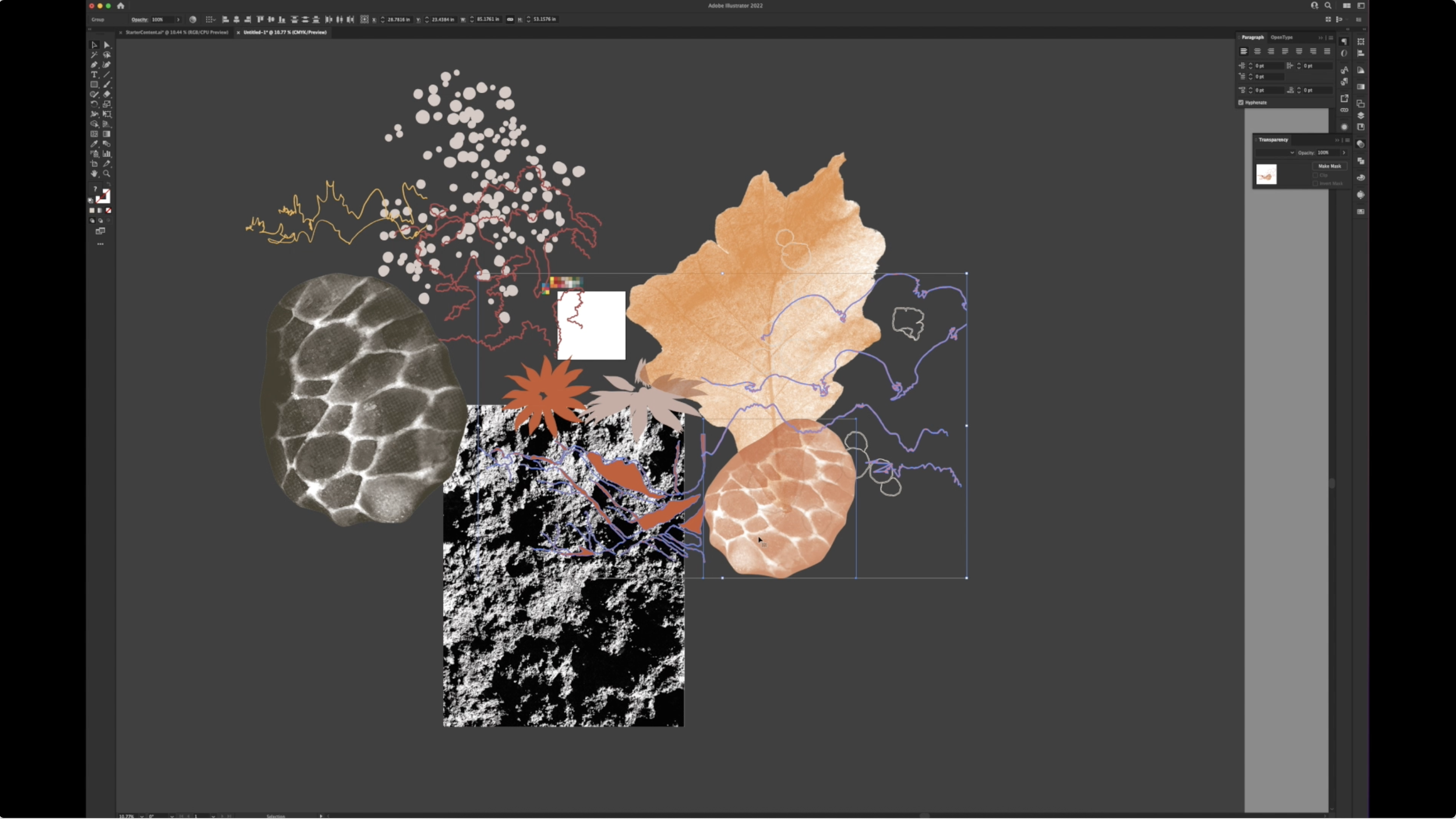
Digital Harvest
Portals
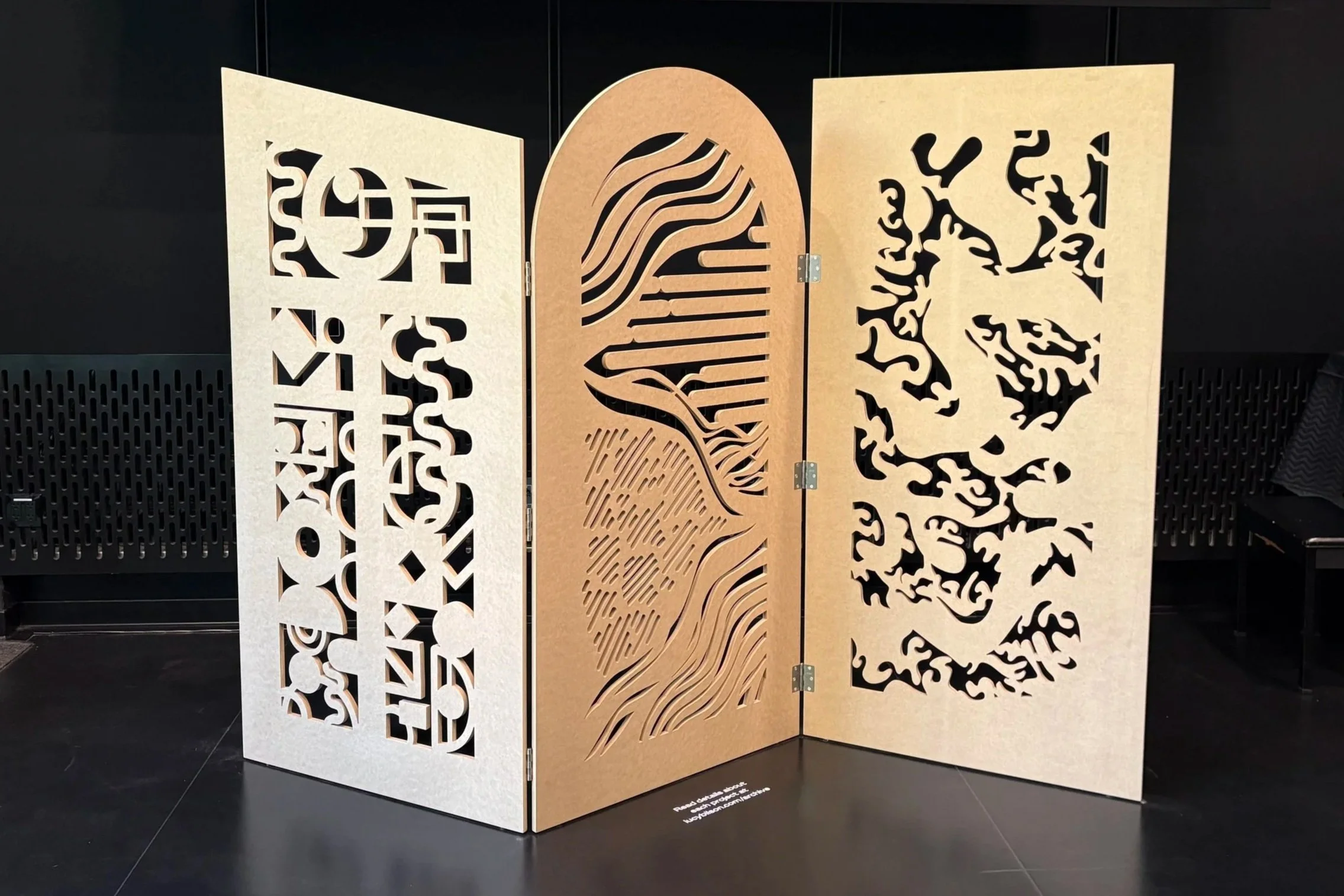
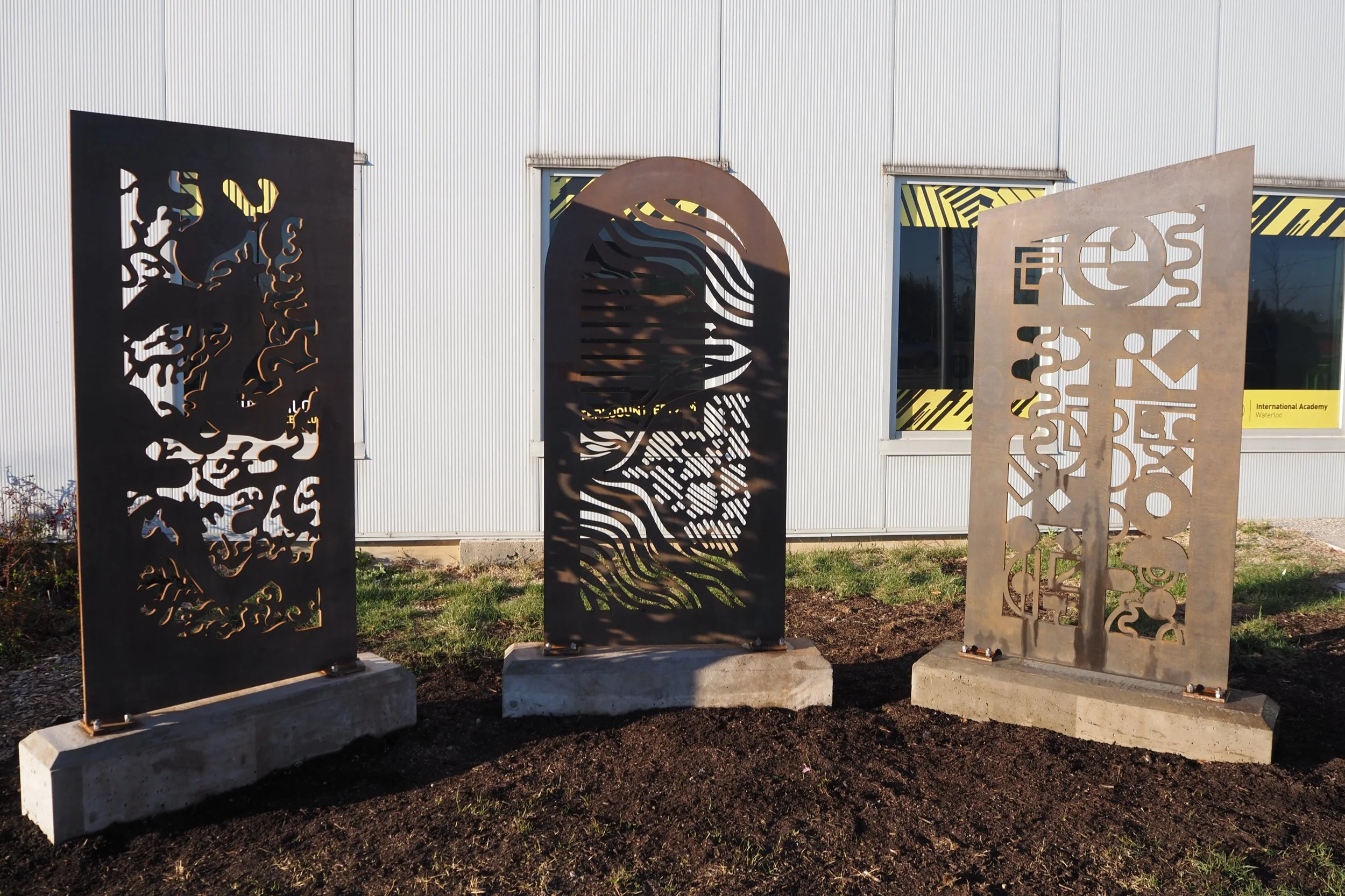
ORIGINAL WORK — Portals is a triptych of steel metal panels, originally installed outside the Eastside Branch library in Waterloo. Each panel represents a doorway, or portal to what the library holds inside. The library itself is also a metaphorical portal, giving people access to the services they are seeking and transporting them through the discovery of new and unexpected experiences. The panels each represent a different aspect of the library experience: creativity, community, and curation. Portals portrays the library as a space where the future is written, through the education of our youth, building of community, free exchange of ideas, access to knowledge, and space to create and imagine.
EXHIBITION WORK — The panels have been refabricated out of CNC cut MDF and hinged together in a screen formation, turning the work into a functional and flexible object which activates the space. The portability of this format (freestanding and comparatively lightweight, compared to steel) creates potential for this piece to be moved to different settings and experienced by more people. It could be used as a room divider, screen, or other aesthetic object.
On This Land
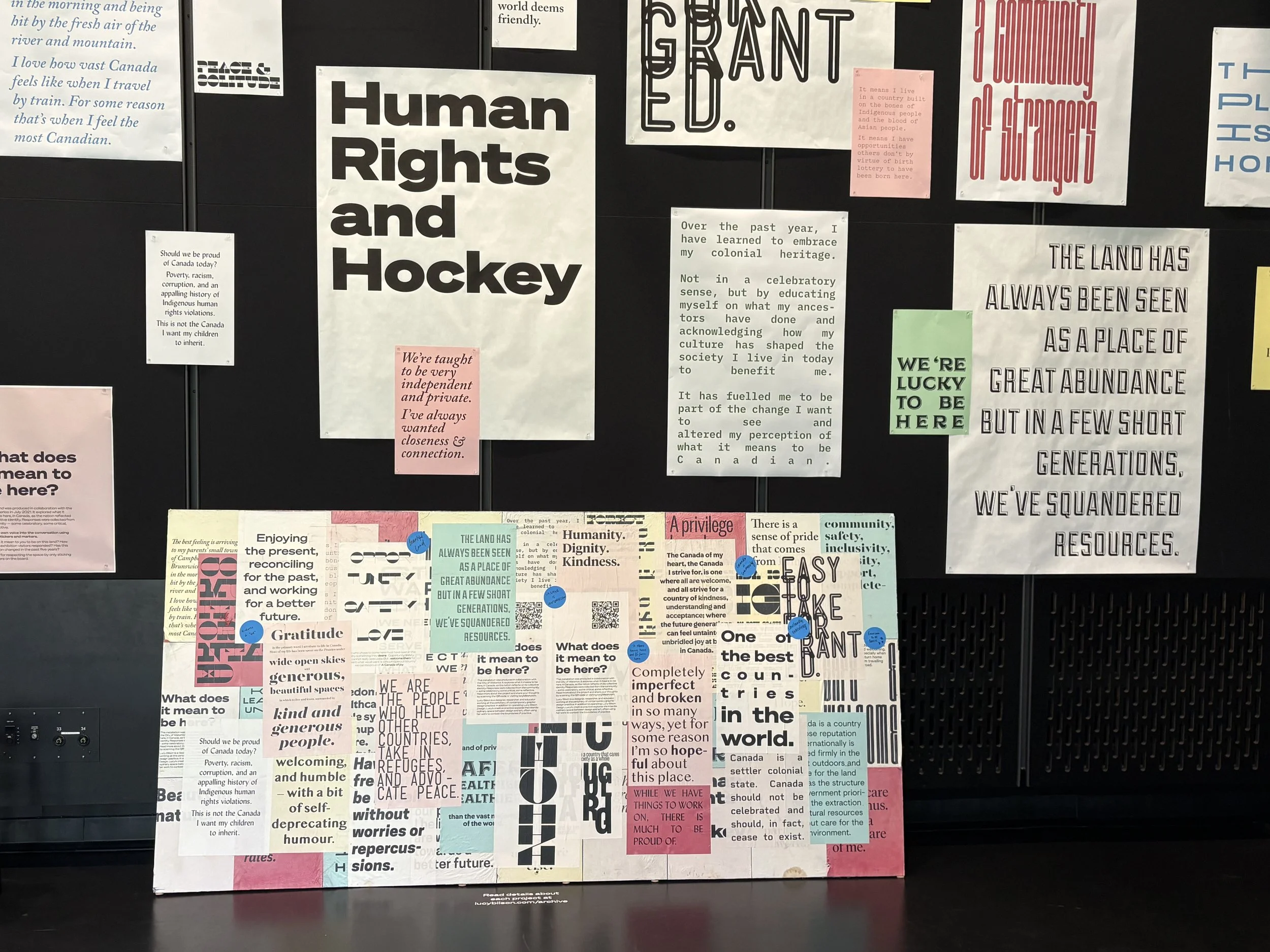
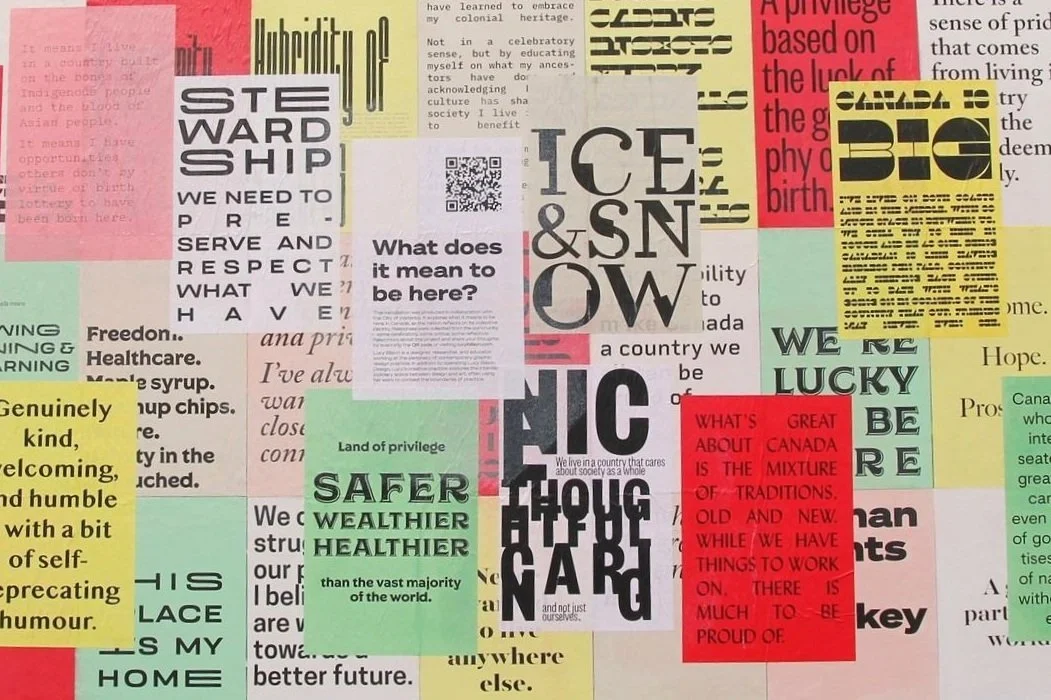
ORIGINAL WORK — On This Land was originally installed in Moses Springer Park in July 2022. It explored the multiplicity of experiences and perspectives which speak to what it means to be on this land, as the nation reflected on the complex issue of collective identity. How are our views of this place shaped by our journeys through this place? What ideas and hopes do we have for our community and identity as we look to the future? Responses to the question What does it mean to be here? were crowd sourced from the community and turned into 50 individual poster designs, using different typefaces to represent different voices. Throughout the month, additional posters were added, creating a sense of an ongoing, evolving, and unfinished conversation.
EXHIBITION WORK — The original panel is reimagined as an interactive piece, inviting audience contributions, with additional posters extending beyond the original bounds of the board. Please add your own response to the work by using the blue stickers and markers, and sticking your thoughts to the board.
The Forest of Curiosities
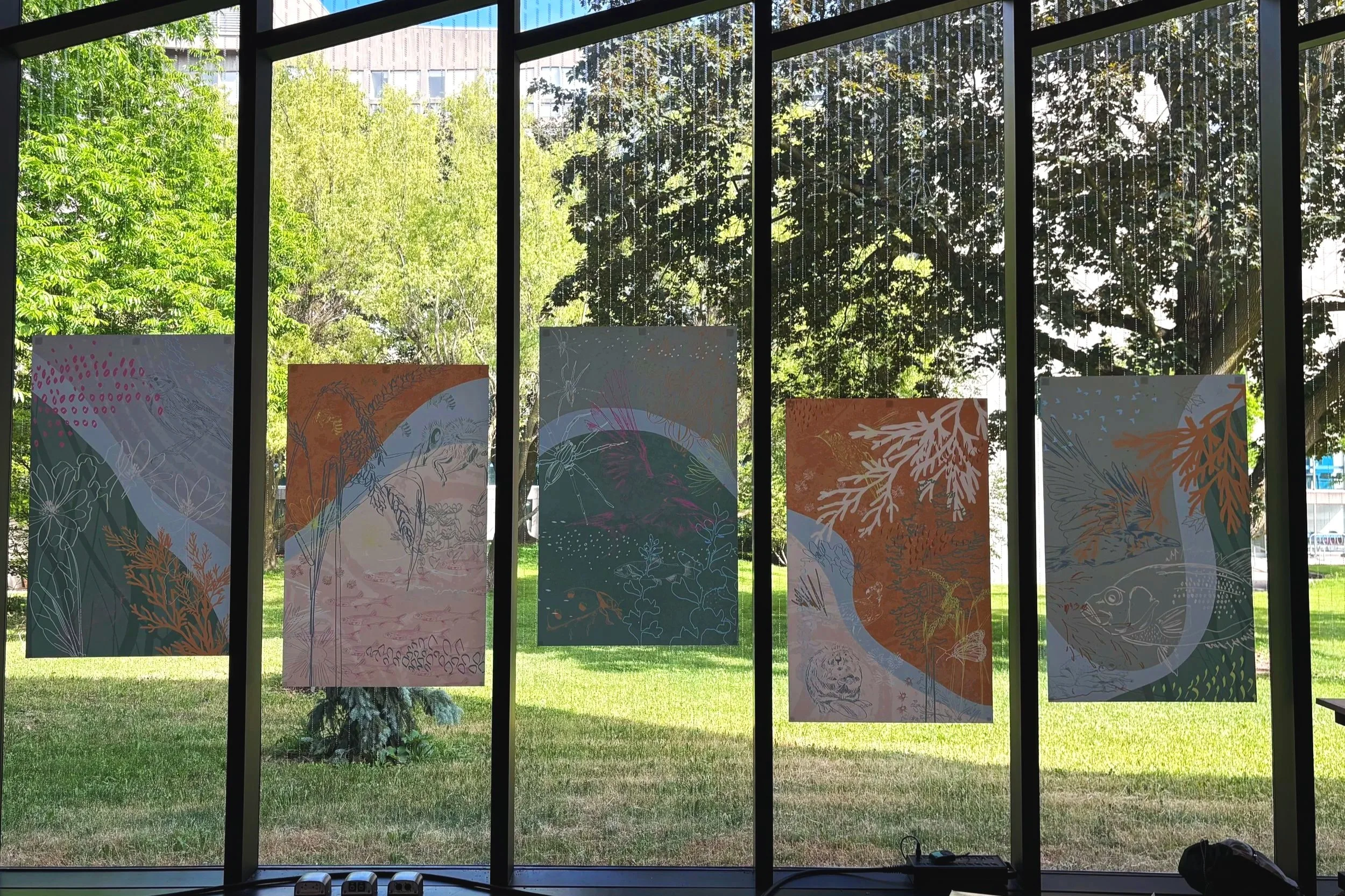
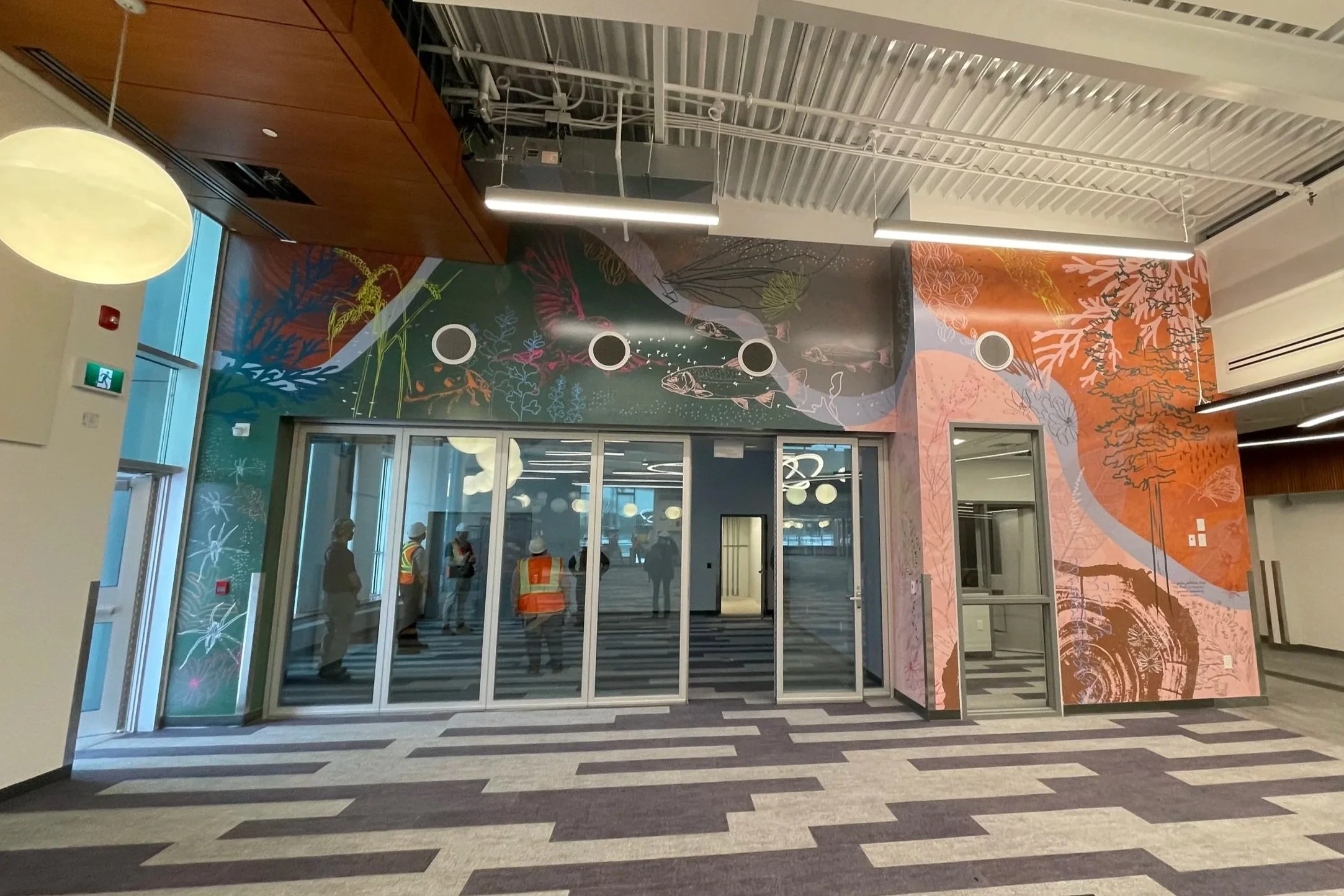
ORIGINAL WORK — The Forest of Curiosities is a 650 square foot graphic installation at the Waterloo Public Library, designed as an exploration and celebration of the natural spaces which surround the library site. Each of the species was carefully selected: the bees and hummingbird were chosen to highlight the importance of pollinators in our food supply. The idea of looking outward to what surrounds the library and reflecting on our present and future on this land is inspired by the building’s architecture and the large windows which look out onto the landscape.
EXHIBITION WORK — The Forest of Curiosities has been reimagined for ImprovLab as translucent panels, hanging in the windows. This new presentation allows the viewer to look through the work, to the outdoors, rather than seeing the work adjacent to views of nature. Choosing hanging panels, as opposed to adhesive vinyl, allows for the possibility of the work being installed in other spaces, after the end of the exhibition. This idea of reuse is core to the exhibition concept.
Feedback Loop
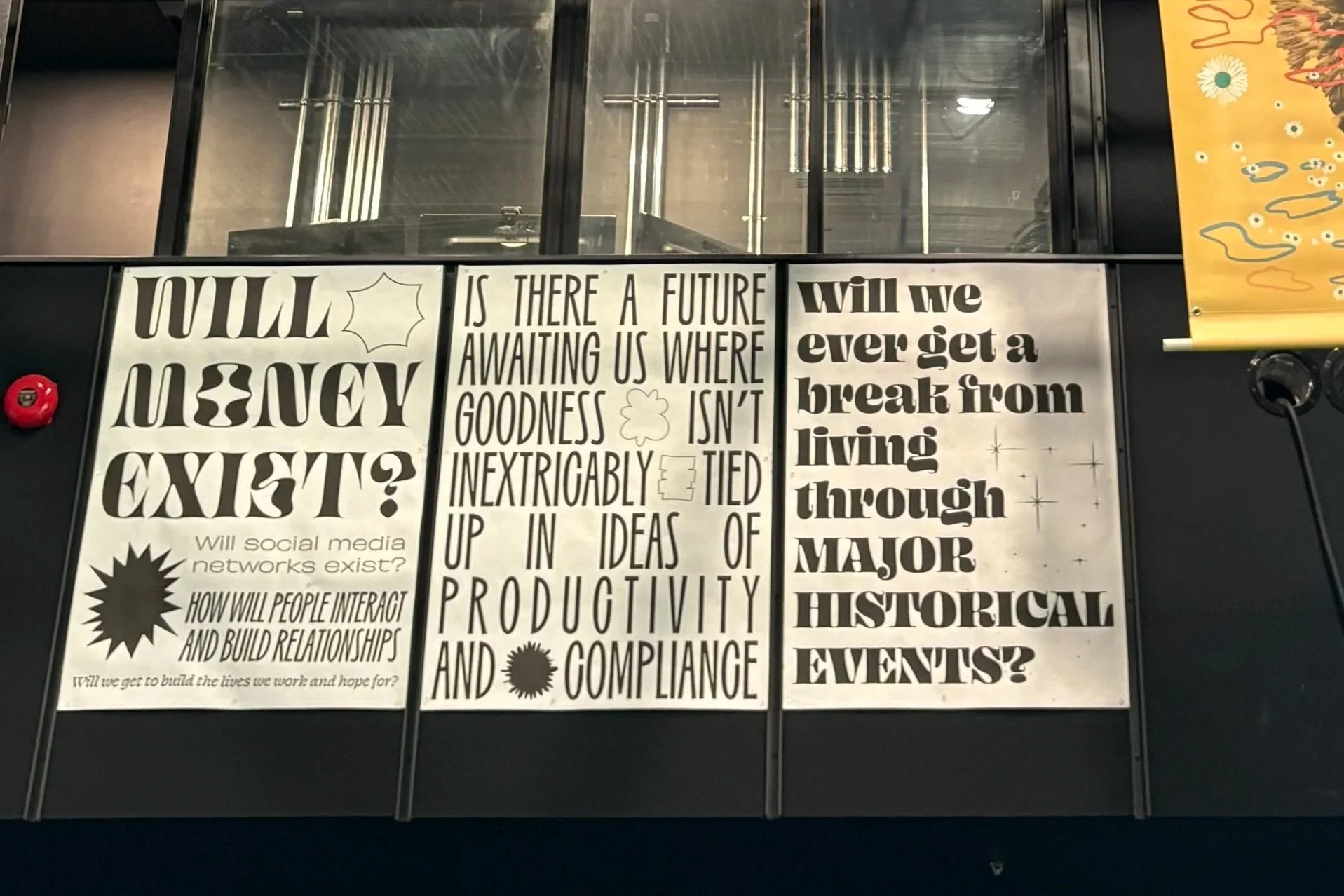
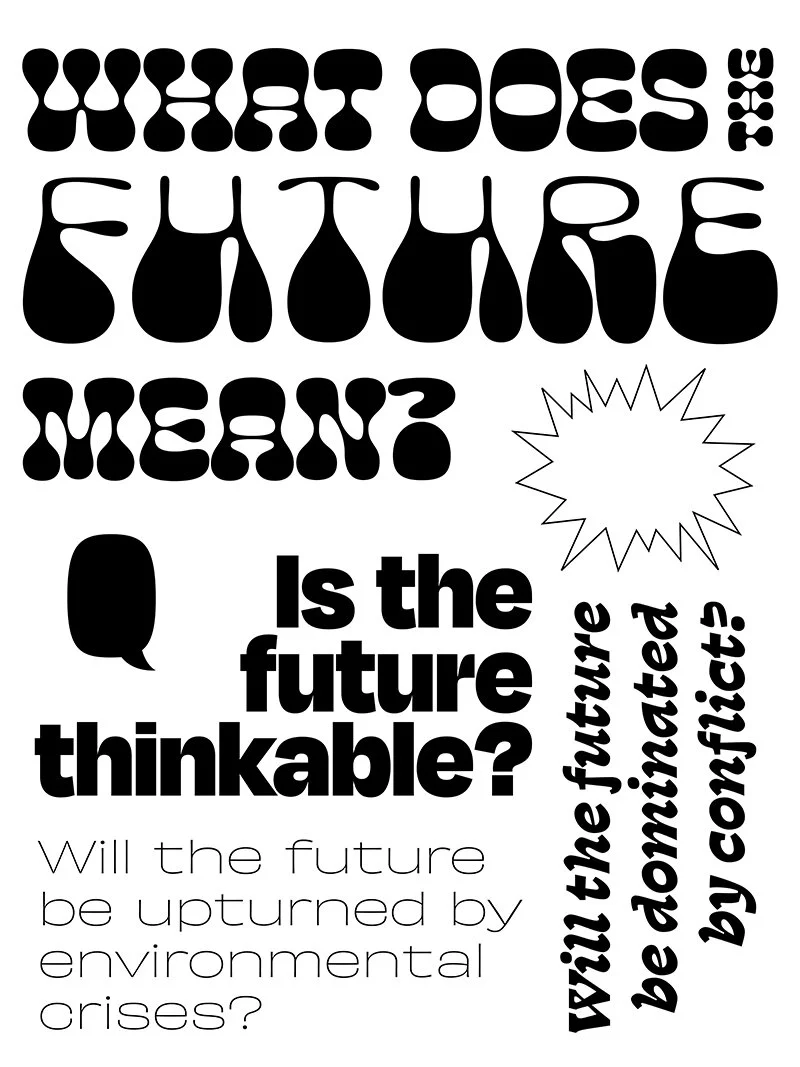
ORIGINAL WORK — Feedback Loop (March 2022) was a collaborative audio-visual project at Silence, Guelph. I designed, produced, and installed a mural on the front of the building, in addition to a typographic installation inside the building which accompanied a series of musical performances and an audio-installation. Feedback Loop existed as an exhibition, event, and audio-visual experience which explored ideas about the future and the feedback loop we can find ourselves in as we get trapped in cycles of news, opinions, and thoughts. It was a response to two years of lockdowns and disconnection from one another and an opportunity to gather and reflect on what was to come next.
EXHIBITION WORK — Oversized posters from the original installation have been reproduced, exploring 200 questions about the future. Revisiting these questions four years on creates opportunity for reflection on what circumstances and perspectives have shifted as time has passed, and to ponder what questions are currently at the forefront of visitors’ minds as they consider the future before them.
Ceremonial Plants
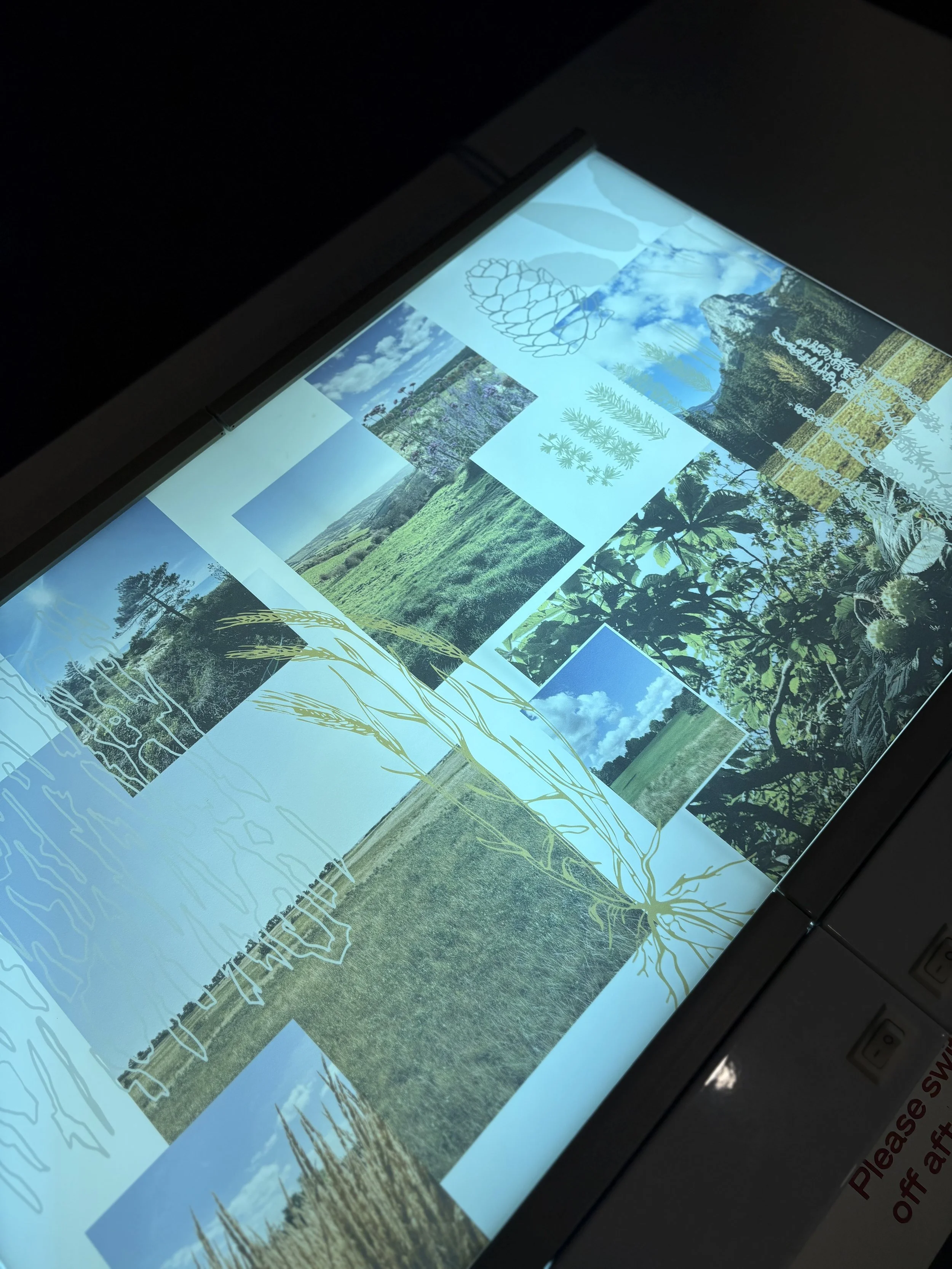
ORIGINAL WORK — The original work is installed at the School of Social Justice Education at the University of Toronto. It features plant species include cedar, tobacco, barley, and sage — plants which have ceremonial and cultural significance to different peoples around the world.
EXHIBITION WORK — This work has been reimagined for installation on a backlit lightbox, and features both process drawings from the original project and photographs of lands that hold personal significance. Photographs include common land in London, UK, Wanuskewin, SK, and multiple sites in Ontario. By reusing elements from the original project process, this iteration of the project explores the concept of anti-extractive reuse. It’s also an opportunity for the viewer to consider what spaces or objects have personal cultural relevance, and what places and lands they have connections to.
Artist Residency
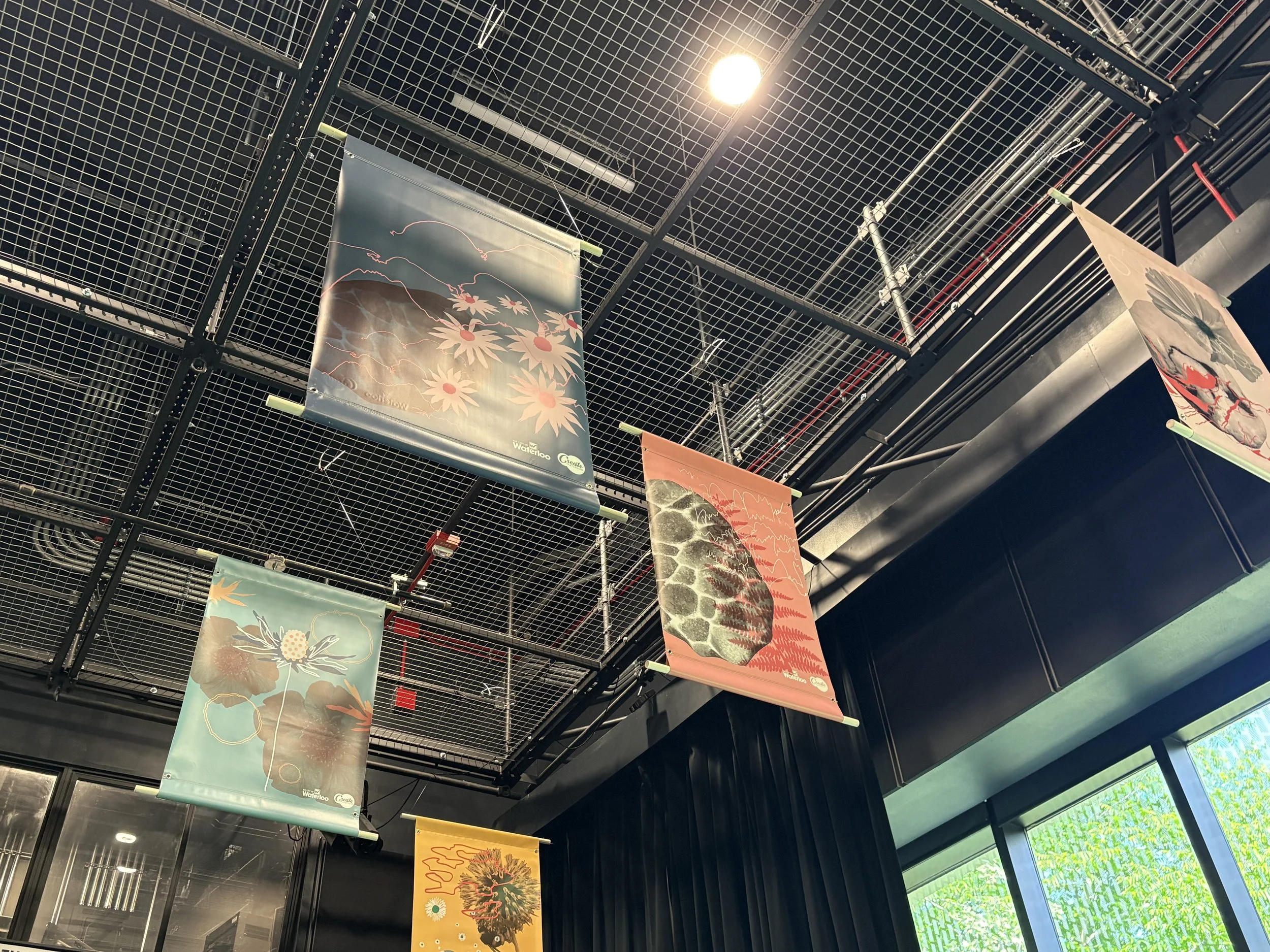
ORIGINAL WORK — In 2021, Lucy became the Artist in Residence for the City of Waterloo, during which time she created work which explored the role of parks, trails, and other green spaces within our urban environment. The residency culminated in the design of 12 large-scale vinyl banners which were displayed on light pole standards at the intersection of the Laurel and Spur Line trails, by City Hall in Uptown Waterloo. These graphic works were a celebration of our natural spaces, encouraging the public to find their own way to use, engage with, and explore the city’s parks and trails. The project was a culmination of several months of research, community engagement, and artistic production exploring the idea of green spaces within the urban environment.
EXHIBITION WORK — The banners are rehung in ImprovLab, shifting their context. This project is the source of much of the visual material in Digital Harvest, and marks the start of Lucy’s exploration of reuse and anti-extraction.
Beak Fad Pool
ORIGINAL WORK — A collaborative film work created by Nick Fraser, first shown during the Feedback Loop exhibition. Shown with permission from Nick Fraser.
Beak Fad Pool: A Video Concoction of Commonplace Content
Conceived and edited by Nick Fraser with creative and technical contributions by Lucy Bilson, Sophie Brown, Cathy Nosaty, Bob Wiseman, Rodney Diverlus, John Russon, Brittany Farhat, and Matt Fong. Sound design by Erwan Noblet with creative and technical contributions by Daniel Fischlin and Lewis Melville.
This short film experiments with visual and audio layering, combining the work of multiple improvisers and media into one film.
Run time: 11 minutes, 19 seconds
Digital Harvest
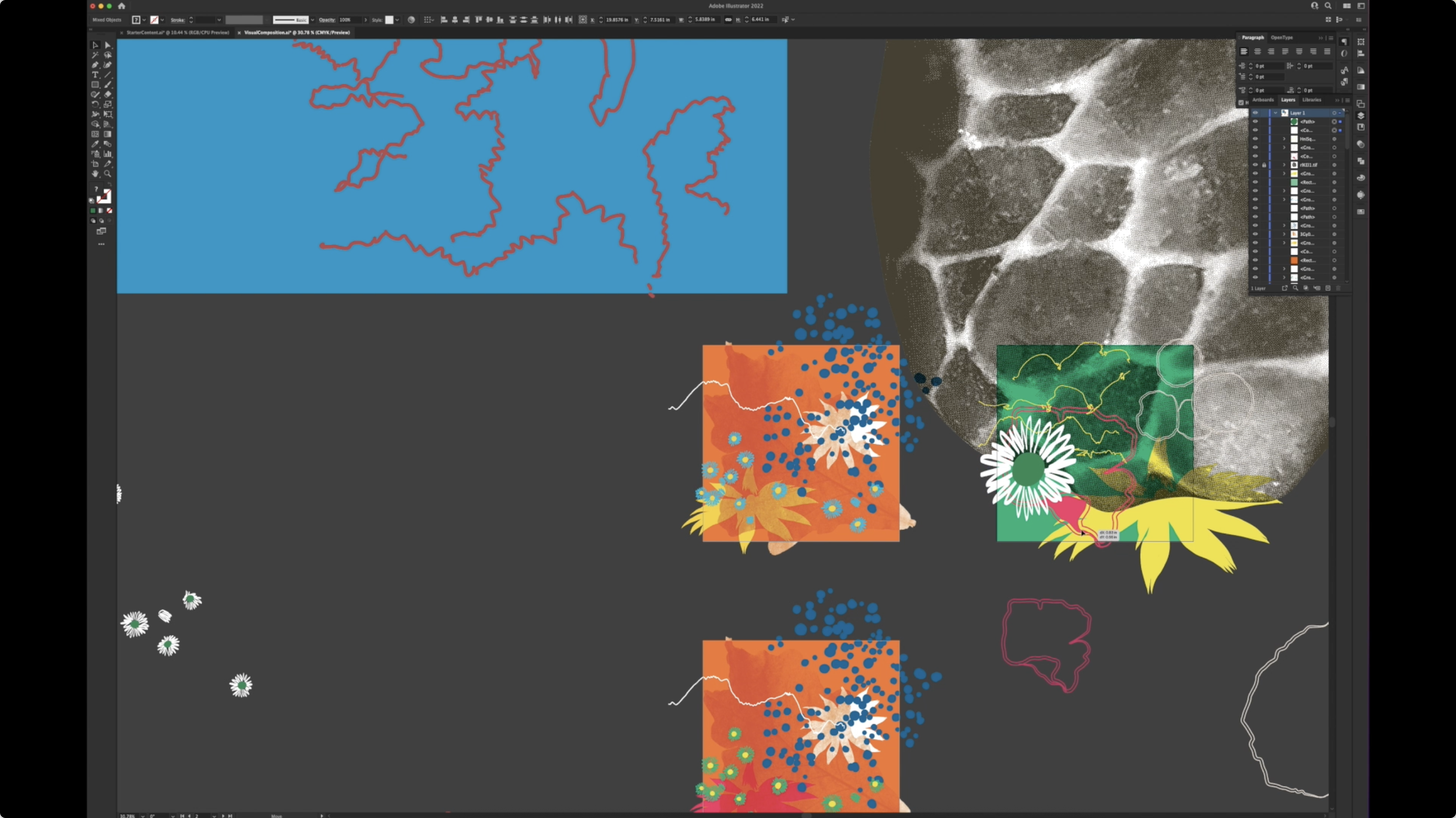
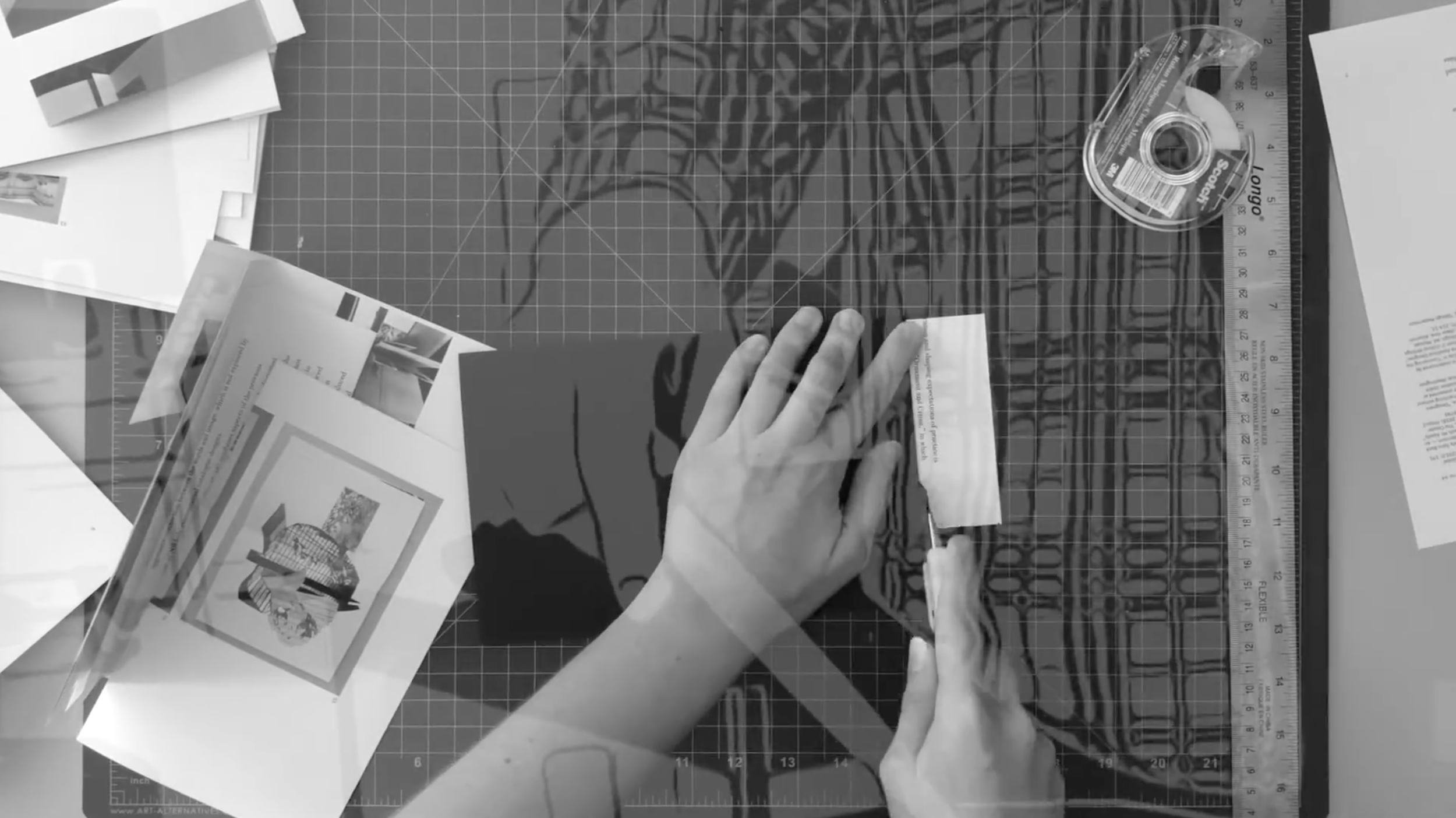
ORIGINAL WORK — Improvisation teaches us that we already have what we need to create. In a context and discipline where newness and originality reign supreme, recycling feels like cheating. First shown at IF 2022, this short film explores ideas of reuse and capitalist extraction. It is a timelapse video of Lucy reusing visual elements from her work as Artist in Residence to create new outputs and is where Lucy first started to develop an anti-extractive design methodology.
Run time: 3 minutes, 3 seconds
Monster Catalogue #6 and Research Video
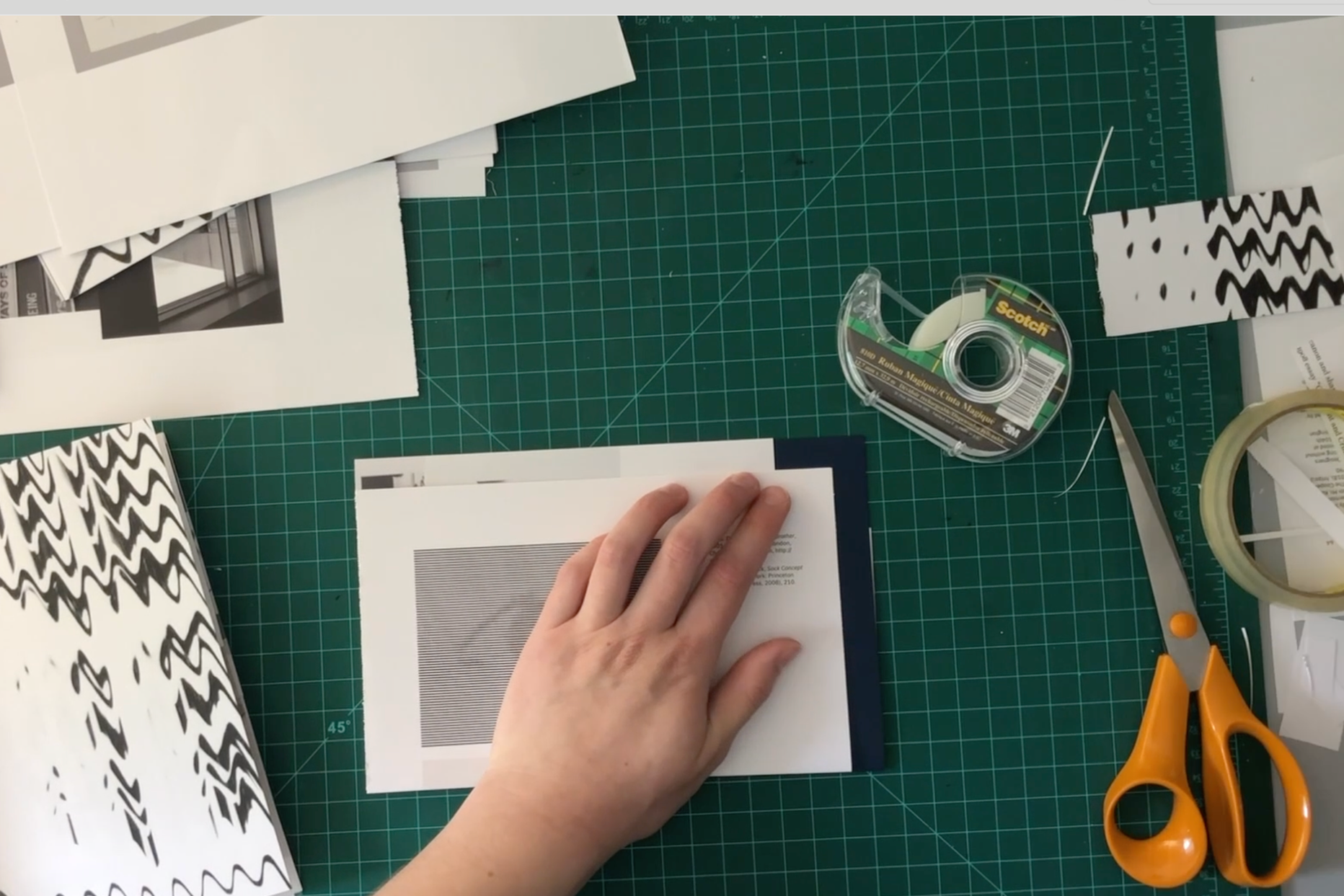
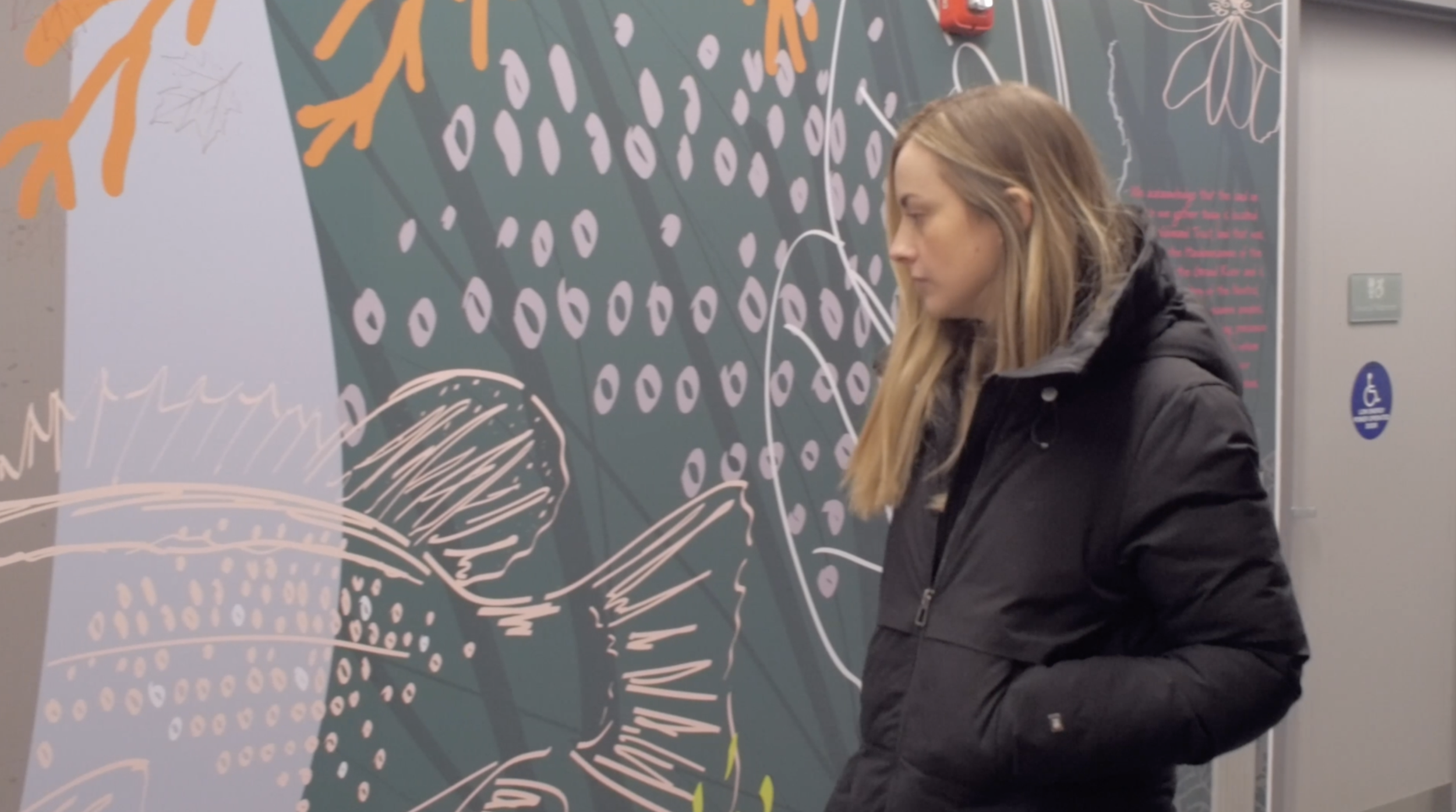
In addition to Beak Fad Pool and Digital Harvest, two other short films are playing in the exhibition. Monster Catalogue #6 (2021, 7 minutes, 21 seconds) explores deconstruction and recreation through the disassembly and reformation of a book. SSHRC Research Video (2025, 2 minutes, 47 seconds) summarises Lucy’s PhD research and showcases some of her installation work in its site-specific contexts.